Ikigai-finding your sense of purpose
Demographic change has brought about a wonderful opportunity for the human race; when you retire from work you may well have another three decades of life ahead of you. And because of scientific progress those years may well be healthy ones, especially if you have taken good care of yourself in your earlier life.
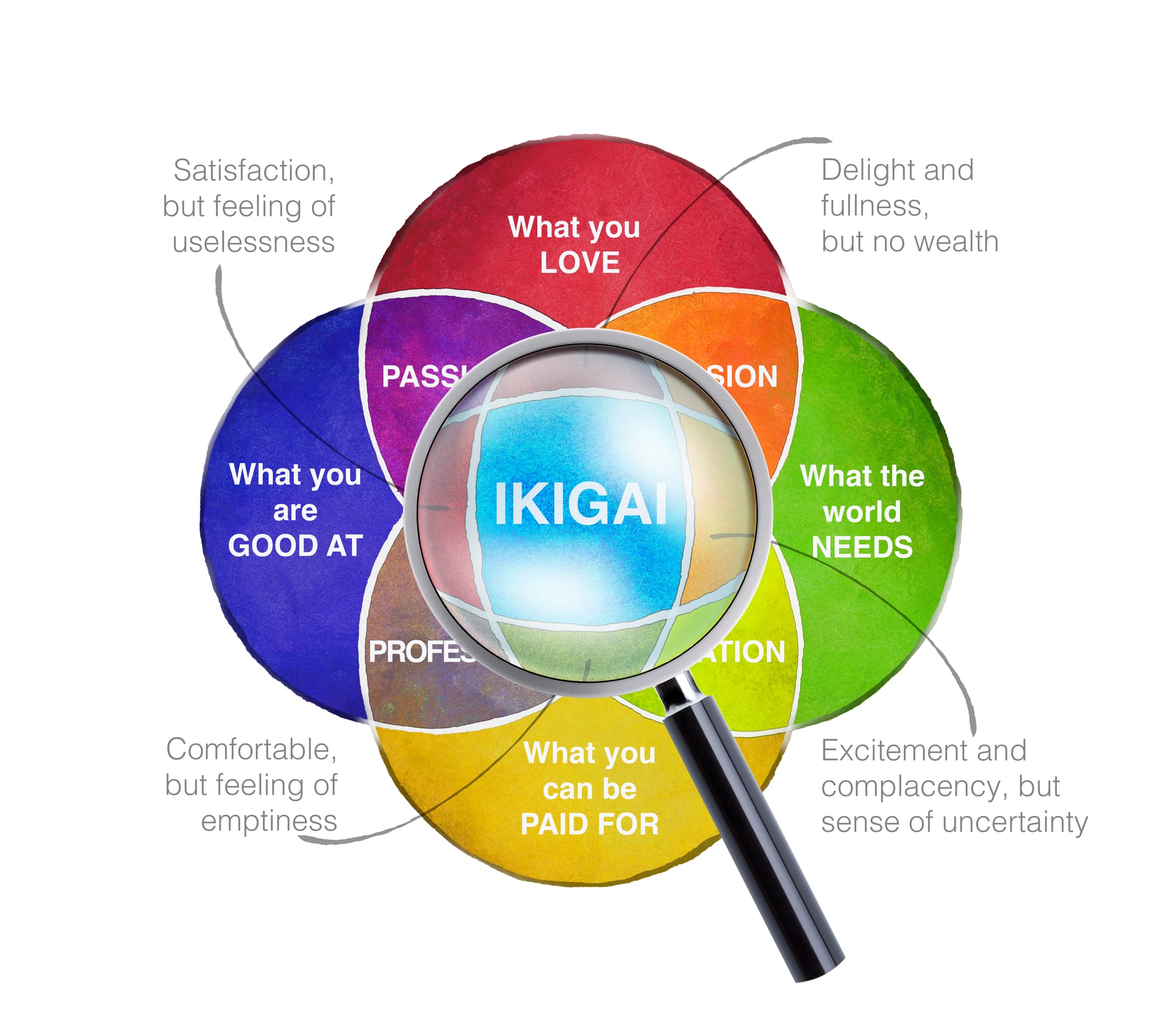
So what is going to motivate you now to get up in the morning if you have just retired? Before retirement it was more obvious, an obligation you had to others to go to work. Now it’s less straightforward. The Japanese have an interesting concept called ‘ikigai’ which translated literally means life (‘iki’) and purpose(‘gai’). It connects work, family, duty and passions. Ikigai has been represented diagrammatically as follows:
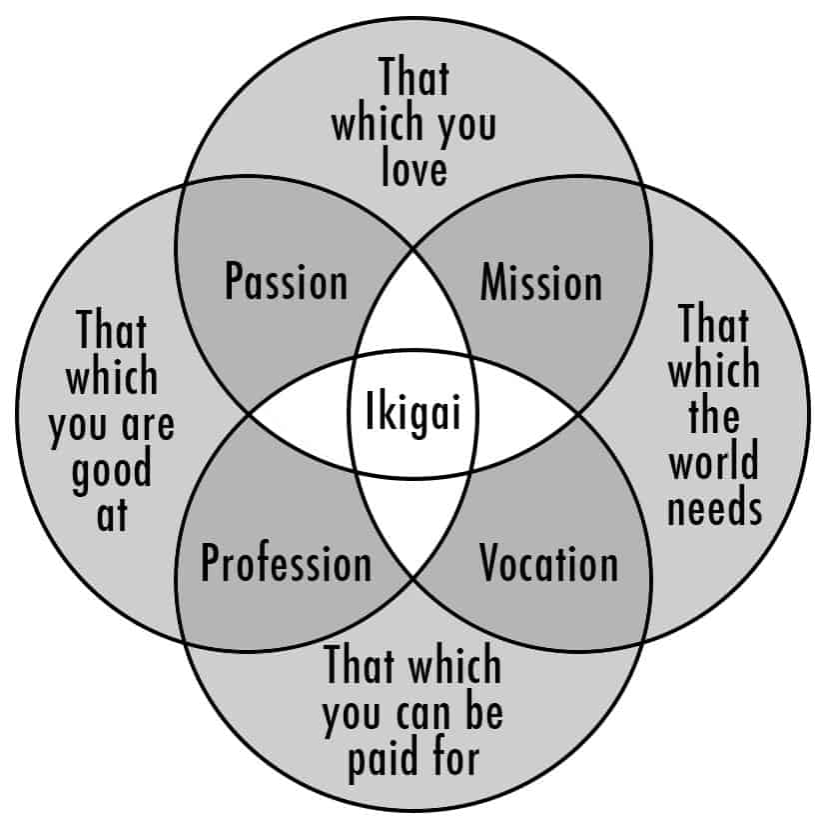
While the diagram says ‘That which you can be paid for’ it should not lead us to think that this is necessarily about paid employment. Perhaps ‘That which you will be rewarded for’ would be a better form of words. As an example, in her book ‘Extra Time’ Camilla Cavendish describes how grandmothers in Zimbabwe had been brought together as community volunteers to provide therapeutic care which would otherwise not have been available due to the shortage of psychiatrists in the country. They exhibited three strong qualities needed in this work; listening skills, empathy and an ability to reflect. It turned out they were more effective treating depression than qualified doctors. After the funding for this experiment ran out, the grandmothers kept going. It seems that the grandmothers themselves benefited from this undertaking, with their own mental health better than expected when it was assessed. That was their reward.A great example of a win-win situation.
Finding purpose isn’t just about what we do when we retire. In the UK Lucy Kellaway, an FT journalist for most of her working life, set up Now Teach, recruiting older people into full-time teaching. She has written passionately about how she and those she recruited have found new meaning from making significant changes late in their working lives. They have learned new skills but also brought rich life experiences to the teaching profession.
More here:-
https://nowteach.org.uk/advice-and-insight/our-stories
There are a number of good TED talks on Ikigai, here’s one that puts the concept across well:-
https://www.youtube.com/watch?v=pk-PcJS2QaU
Steve Jobs once gave an amazing speech to graduates of Stamford University. Whilst his message was directed at newly-minted graduates it can be applied to people of all ages. He said this:- “Your time is limited, so don’t waste it living someone else’s life. Don’t be trapped by dogma — which is living with the results of other people’s thinking. Don’t let the noise of others’ opinions drown out your own inner voice. And most important, have the courage to follow your heart and intuition. They somehow already know what you truly want to become. Everything else is secondary.”
Watch and listen here:-
https://www.youtube.com/watch?v=UF8uR6Z6KLc
Have you found your Ikigai? Has this changed over your life? Do share your thoughts with us.